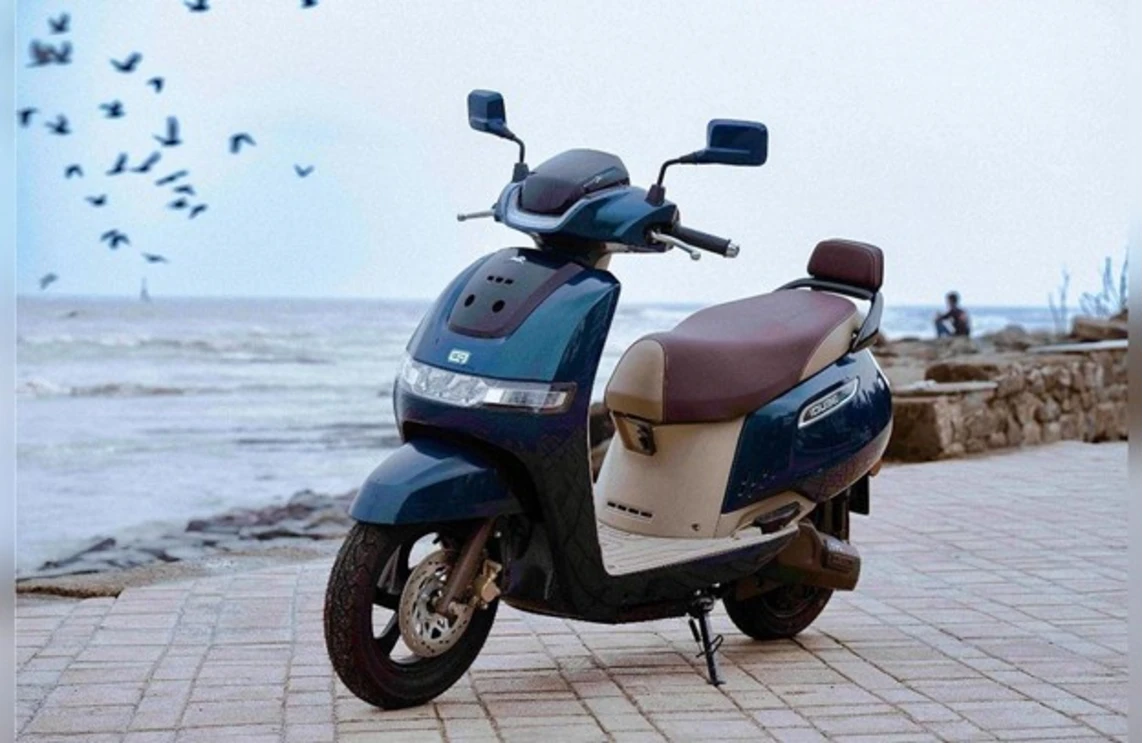
In the last few years, the concept of electric mobility has gained huge traction. As an effort to minimise their carbon footprint, more and more people are making a shift towards electric vehicles. This led to a significant rise in the number of electric scooters that are being introduced in the Indian automotive market. Among all the options available these days, the TVS iQube definitely stands out, and the main reason behind this popularity is its impressive IDC range.
Wondering what is IDC range in the EV industry? Here is an explanation for the same:
What is the IDC range?
The IDC (Indian Driving Cycle) range is a standardised measurement in the EV industry. The simple meaning of IDC range in electric scooters is how much distance it can travel on a single charge in Indian driving conditions. Before getting launched into the market, every electric vehicle goes through a series of tests under controlled laboratory conditions. This provides a benchmark to compare various electric vehicles and determine their efficiency.
TVS iQube’s IDC Range
|
Variant |
IDC Range |
|
TVS iQube 2.2 kWh |
94 km |
|
TVS iQube 3.1 kWh |
123 km |
|
TVS iQube 3.5 kWh |
145 km |
The Real-World Performance of TVS iQube
While the IDC range of an electric scooter provides a useful estimate of how much distance it can travel on a single charge, the actual range can slightly vary. Sometimes, the distance that you will be able to cover in the real world can differ from the given IDC range.
Book Now!
Here are a few factors that influence the range of your TVS iQube:
Traffic Conditions
The traffic conditions you ride your vehicle in can have a significant impact on the range. On highly congested roads with stop-and-go traffic, braking and acceleration are both more frequent. This means more energy is required by the vehicle, and the range reduces.
Speed
While riding at faster speeds, air resistance increases, and the battery of your scooter also drains faster. This will potentially lower the range of your TVS iQube. On the other hand, you can cover more distance while driving at a lower speed.
Terrain
The condition of the road also has a direct impact on the scooter’s range. When you ride on bumpy, rough roads, the rolling resistance of your vehicle also increases and leads to a lower range. But while riding on flat, smooth roads, you can achieve a higher range with your TVS iQube.
Tyre Pressure
To achieve an optimal range, it is important to ensure adequate tyre pressure. Riding with underinflated tyres can reduce the range significantly, as it increases the surface contact area, resulting in higher rolling resistance.
Final Thoughts
The IDC range of TVS iQube is unarguably the best in its segment, making it a preferred choice of modern riders. The best thing is that the real-world performance of this electric scooter also aligns well with its specifications. Apart from this, the TVS iQube also manages to extend its real-world range by up to 7% per charge cycle with its best-in-class regenerative braking. So whether you are travelling long distances on highways or just riding within the city, you can definitely rely on this electric scooter.
FAQs
-
1. What is the IDC range of the TVS iQube?
The IDC range of the TVS iQube varies depending on the battery capacity. For the 2.2 kWh battery capacity, the range is 94 km; for the 3.1 kWh battery, it is 123 km, and for the 3.5 kWh variant, it is 145 km.
-
2. What is the difference between the IDC range and the real-world range of an electric scooter?
The IDC range is calculated under ideal, controlled laboratory test conditions, while the real-world range is the actual distance you can cover on a single charge in everyday riding.
-
3. What are the factors that influence the real-world range of the TVS iQube?
The main factors that have a direct impact on the real-time range of the TVS iQube include traffic conditions, terrain, speed, and tyre pressure.
-
4. What is the impact of regenerative braking on the TVS iQube’s range?
The regenerative braking feature of the TVS iQube helps capture energy while slowing down more efficiently. This extends the real-world range of your scooter by up to 7% per charge cycle.
---------------------------------------------------------------------------------------------------------------------------------------
Also Read the Blog:
Maximizing Electric Scooter Battery Life: Things You Must Know