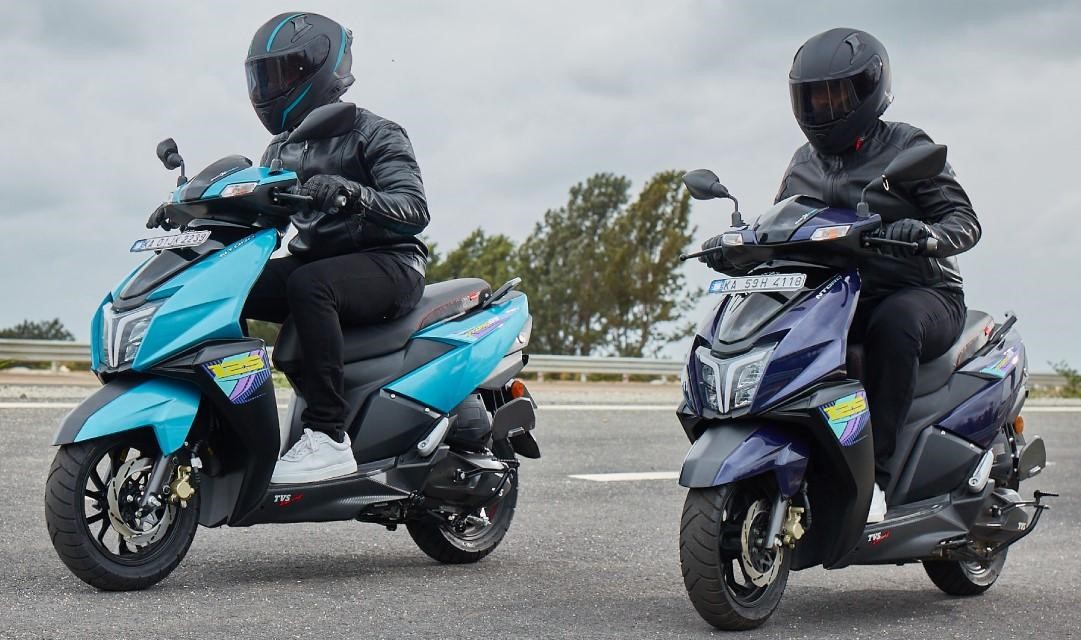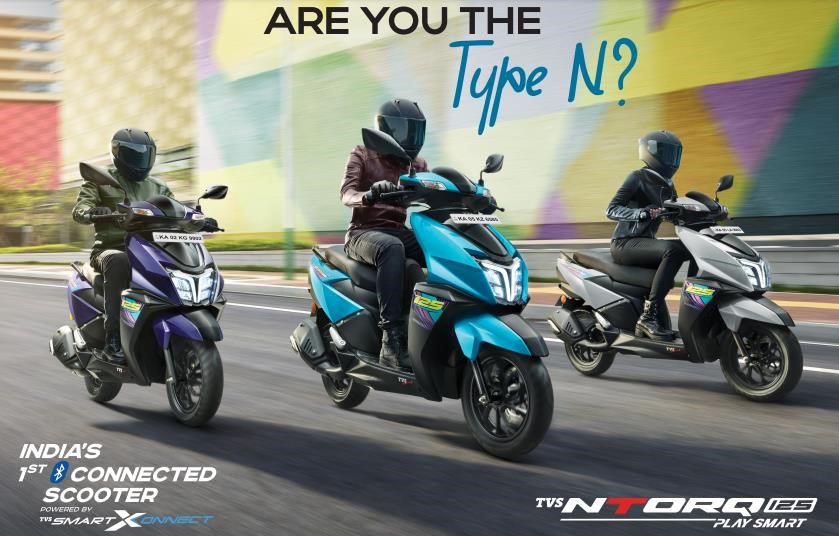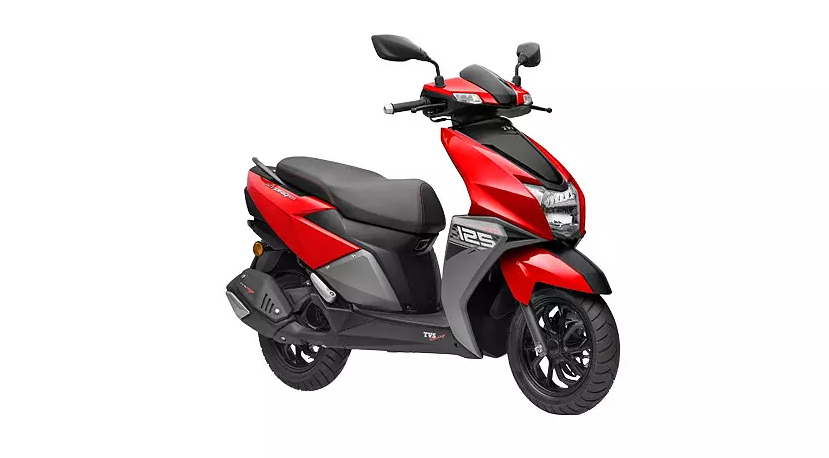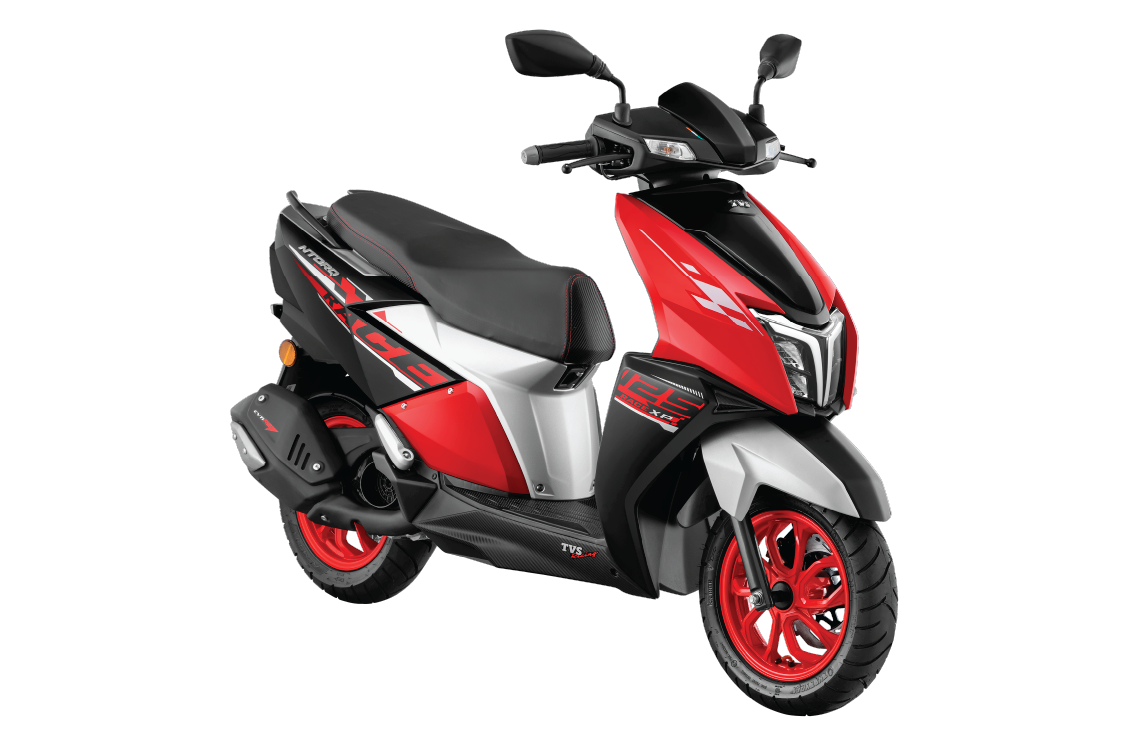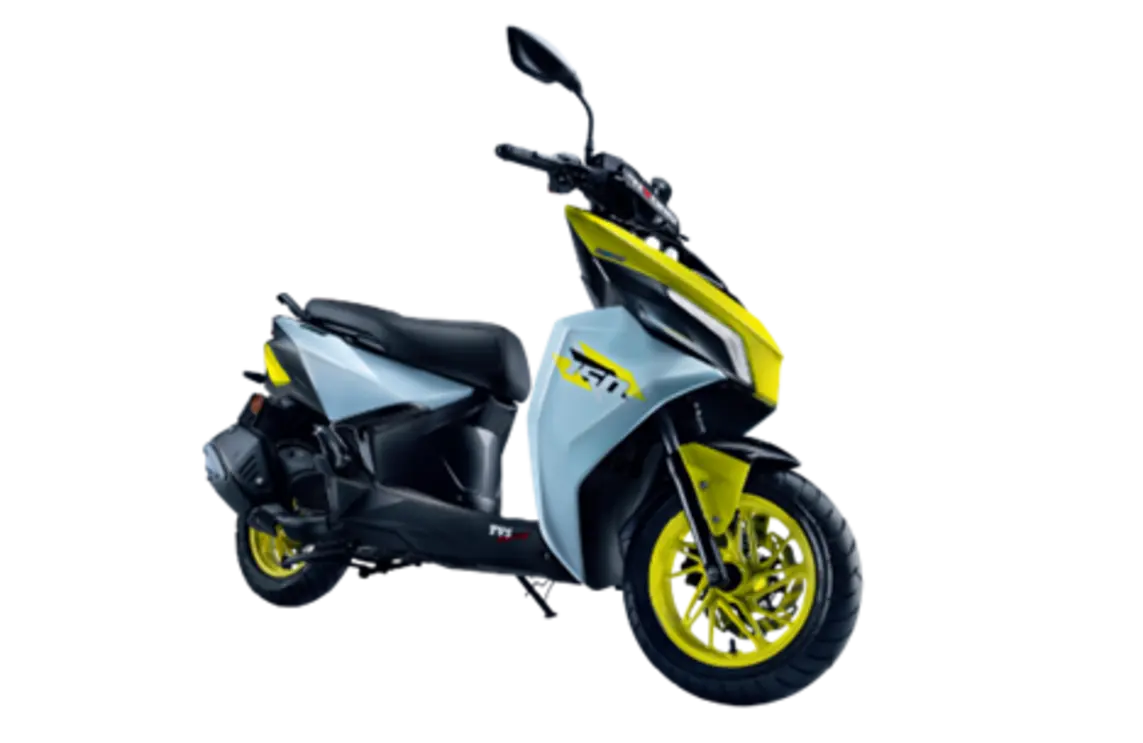
TVS Motor Company introduced the TVS NTORQ 150 as India’s first Hyper Scooter, bringing a performance-focused approach to the scooter segment. Powered by a 150cc, 3-valve engine, it delivers 0–60 km/h acceleration in 6.3 seconds and a top speed of 104 km/h. Beyond performance, the NTORQ 150 comes equipped with segment-first features such as Traction Control and ABS, along with Quad LED projector headlamps and aerodynamic winglets that enhance its sporty character and road presence.
What is 3-Valve Engine Technology?
Most conventional scooter engines use a 2-valve configuration, consisting of one intake valve and one exhaust valve per cylinder. The 3-valve setup takes a different approach by incorporating an additional intake valve, resulting in two intake valves and one exhaust valve. While this may appear to be a minor design change, it has a significant impact on the way the engine breathes and performs.
The extra intake valve increases the total opening area available for the air-fuel mixture to enter the combustion chamber. With a larger intake area, the engine can draw in a greater volume of charge during each intake stroke. This improved airflow helps the cylinder fill more effectively, creating the conditions for more efficient combustion and better power delivery.
Think of it as widening the entrance through which air enters the engine. A larger opening allows a greater volume of air-fuel mixture to flow into the cylinder in the same amount of time. By using two intake valves instead of one, the engine can breathe more freely, particularly at higher engine speeds where airflow becomes increasingly important.
Suggested Read: How the TVS NTORQ 150 Scooter Beats Its Rivals - Full Breakdown
How Does it Work in the NTORQ150?
The NTORQ 150's engine uses two intake valves to draw a larger volume of the air-fuel mixture into the cylinder during each intake stroke. By increasing the intake area, the engine can breathe more efficiently, supporting improved combustion and stronger performance without a significant increase in engine size or weight.
The single exhaust valve is responsible for expelling burnt gases from the combustion chamber. Since exhaust gases leave the cylinder under pressure, a single exhaust valve can often provide sufficient flow capacity. This two-intake, one-exhaust configuration strikes a balance between airflow efficiency, performance, and compact engine packaging.
The result is an engine that delivers responsive acceleration and efficient power delivery while maintaining lightweight and space-efficient design qualities that are particularly valuable in a performance-oriented scooter.
On the road, the NTORQ 150 feels responsive and eager, reflecting the benefits of its 3-valve engine design. The setup is not just about improving specifications on paper; it enhances airflow into the combustion chamber, contributing to smoother power delivery and quick throttle response. In city traffic, the scooter accelerates confidently and feels refined across varying speeds. This is where the 3-valve technology makes a noticeable difference, helping the engine deliver performance that feels both efficient and engaging in everyday riding conditions.
FAQS
- 1. What is the top speed of the TVS NTORQ 150?
The TVS NTORQ 150 has a claimed top speed of 104 km/h.
- 2. What makes the 3-valve engine on the NTORQ 150 different from a conventional scooter engine?
The 3-valve setup uses two intake valves and one exhaust valve, compared to the single intake-single exhaust design in conventional engines. The dual intake valves increase the air-fuel intake area, allowing the engine to breathe more efficiently and produce a peak power of 13.2 bhp.
- 3. What is the peak torque of the TVS NTORQ 150 and at what rpm does it deliver?
The NTORQ 150 produces 14.2 Nm of peak torque at 5500 rpm, delivering a strong mid-range punch that makes overtaking and urban acceleration feel immediate and effortless.
- 4. Does the 3-valve engine improve real-world riding performance or just peak numbers?
Both. The architecture improves combustion efficiency across the rev range, not just at peak. The torque arriving at 5500 rpm means the power is accessible in everyday riding conditions, resulting in zero powertrain lag and confident acceleration without needing to rev hard.
Also Read:
TVS NTORQ 150 TFT: Navigation, Voice Assist & 50+ Connected Features
What is iGO Assist? Understanding the NTORQ 150’s Boost Mode
High Performance, Smart Efficiency: Inside the NTORQ 150cc Engine
Braking Confidence: Understanding the NTORQ 150 Scooter Safety Systems